Showing posts with label Symphonic Black Metal. Show all posts

Friday, 2 November 2012

DIVAHAR

Symphonic Black Metal
http://www.facebook.com/pages/DivahaR/108336862538569?fref=ts
http://de.myspace.com/divahar


Dev - Vocals
Urubani - Guitars
Skadi - Guitars
Freya - Bass


Session Members

Asta - Keyboard
Levon - Drums


Let’s start with the basic facts. Could you give us a little insight into the history of DIVAHAR.

I had the idea of forming a band long before DIVAHAR, but back then it seemed to be an unrealistic dream ... Back in 2008 when I had started playing guitar and already had some music composed, Urubani joined me and we started to work together on some songs which eventually grew to be the first DIVAHAR tracks. The outline of the band became more stable in 2009 when Skadi (guitars) joined the band. Soon after we chose the name DIVAHAR. The lineup of the band was completed with the affiliation of Freya (bass) in 2010.


Can you please explain the meaning of the name DIVAHAR to us. 

"Divahar" is originally an Armenian word. Most commonly it is translated as “possessed” or “possessed by a demon”. It also contains the meaning of the word “divine". The Armenian word for Demon is Dev or Diva. It has the same root and reflects the same idea as the word "divine". The roots of both are in the Indo-European language family. So what DivahaR actually means is "To be possessed by divinity".


How and when did you start to get into Metal?

Having discovered metal very long ago I am still a sincere fan of it. I remember that in the early days it was really hard to find metal CDs around here and basically anything related to metal. SLAYER and particularly Thrash Metal played an important role in my introduction to the metal world. Furthermore I was also largely influenced by such bands as Morbid Angel, Burzum, Dark Funeral, Bathory, Satyricon, Mayhem, etc.


After listening to your live videos on Youtube I think that you’re sounding very Norwegian. I hear a lot of Dimmu Borgir in your sound. Do you agree? You even covered „Towards the Pantheon“ by Emperor. What are your thoughts on Norwegian Black Metal? How did you get in touch with Norwegian Black Metal and what’s the fascination of this kind of music for you?

It was quiet predictable that we would sound Norwegian. Because to us the genre Black Metal first of all are the Scandinavian and particularly the Norwegian style of black metal. And it’s not surprising that DivahaR’s music was influenced by such bands as Burzum, Emperor, Limbonic Art, Dimmu Borgir, Immortal, Satyricon….


And like the Norwegian bands you mentioned, you are also using pseudonyms and corpse paint when you go on stage. Is it just an image or do you want to give something else to the audience?

You can see DivahaR on stage both with and without corpse paint as we don’t have this kind of stereotypes. What about our pseudonyms, I think they help to distinguish and highlight the individuality of the band as well as to reflect the personality of each musician.


But why are you using pseudonyms from the ancient norse mythology? How does that go together with the Armenian word DIVAHAR?


In fact, some of the band members didn't take names from the Armenian mythology as pseudonyms due to the fact that almost all of these names are and were always widely used as ordinary female names in Armenia. For example some members of the band too bear names of Armenian goddesses. The only bad thing about this kind of popularity of mythological names is that they have lost their original identity and the merits they initially had, by being overused in the day-by-day life.


And what about the Nordic names?

Well, from our very childhoods we were deeply interested in and inspired by the legends, mythology and the folklore of our and other nations. We just had learn more about different peoples, their ideologies and the values they held high. And eventually we have taken on the names of characters that in many points stand closer to our personality and better reflect our own individuality, which by chance were from Norse mythology.


I’m quite sure people ask you this all the time, but what about the All-Girl-thing? Was it your decision or did it just happen?

Still in 2009 Urubani and I started to work together with some female keyboarders planning to create the band. In these early days the project consisted of three female members. As the working process with this line-up was quiet interesting and productive, the idea of having only female members was born.


Are there many girls listening to metal in Armenia?

The metal scene is very small in Armenia, but the gender apportion is almost the same as in the international metal scene. Of course, there are female metalheads, but the proportion of male fans is quite higher.


I understand Armenian society can be pretty conservative, especially outside the big cities. How does society react to you, being women and playing this extreme music? Did you ever get in trouble?

Yes, sure it’s hard, but I guess we’ve gained a kind of immunity during these years and we got used to the fact that many people don’t understand the real essence of our scope. Sadly we are facing this every day and each of us can change something only by struggling and fighting against this non-acceptable reality, but never by escaping from it.


Right on! Armenia is the oldest Christian country in the world. What is your view on Christianity and the church in Armenia?

It’s definitely not religion which makes us love and be proud of Armenia. What inspires us about our fatherland is it’s glorious past. It's that our roots are going back deep into time, and various values which sadly are unknown to the world.
In fact, DivahaR doesn’t follow any religious view as upon our comprehension the religion always was and remains a violent, rude form of control over humanity and nothing more.


So your lyrics aren't religious or satanic either?

DivahaR’s lyrics comprise emotional and psychological aspects, sometimes even combined with psychedelic and allegoric elements. They are about the spirit and force of Nature, the Truth, the prospect of Light and the eternal struggle…


Can you tell us a little bit about the current state of DIVAHAR. As far as I know, you haven’t released an album yet. Did you record anything so far? Are you planning to release an album? Are you looking for a label?

We are still looking for a label as so far we haven't found a convenient option yet, judging from the proposals made by various labels. It’s almost been a year since we started to do our first album, but every time some external factors, like problems concerning the recording studio or people we cooperate with to realize the record, impede our plans. As a result the record still remains unfinished. But lately once again we have started the album recording process and we’re doing our best to realize our first album in the near future.


Sounds good! What was the greatest moment of your life as a musician with DIVAHAR so far?

The most impressive moment I had as a Divahar musician was when I perceived that Divahar really inspired some people to feel and to be more powerful, to struggle for their beliefs and to go on searching for a light


What are your five favourite Black Metal albums?

1. Burzum - Filosofem
2. Dark Funeral – Diabolis Interium
3. Limbonic Art – Moon in the Scorpio
4. Emperor – Anthems to the Welkin at Dusk
5. Mayhem – De Mysteriis dom Sathanas


Good choice! Thanks for the interview!


Friday, 21 September 2012

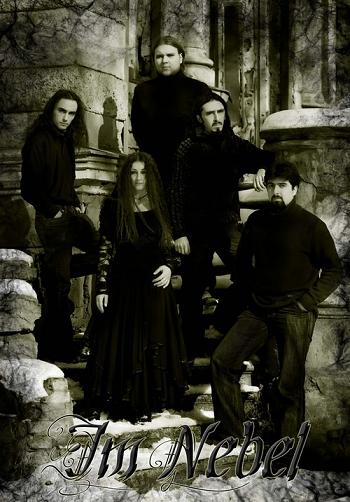
IM NEBEL

Avantgarde/Symphonic Black Metal
http://www.imnebel.com


Sergiy Ermolaev – Bass
Tim – Drums
Michael Lenz – Guitars, Vocals
Vasil Doiashvili – Vocals
Gregory Lobjanidze – Guitars


IM NEBEL [German for: in the fog] -  a rather peculiar name for a Georgian Symphonic Black Metal band. Nevertheless in terms of sales, they're one of the most popular metal acts on the Caucasus. Reason enough to get in touch with the guys and chat a little about the state of things in Tbilissi and Georgian Black Metal. But first of all: what about that German band name? There’s a poem by Hermann Hesse titled „Im Nebel“. Am I right in assuming that your bandname is a reference to the poem, Michael? 

Michael: You are absolutely right. When we started to rehearse with the guys, I had four unfinished songs. The names of the songs were "Im Nebel 1, 2, 3 and 4", and the writing of these songs was inspired by Hermann Hesse’s poem “Im Nebel”. The other three songs were renamed to “Faded Mankind”, “Inconsistent Thoughts” and “Unbeliever’s Script“. They are on the album „Vitriol“. Actually the imagery that Hermann Hesse describes in his poems is similar to our real lives. I think, the title IM NEBEL is also a good name for a band ...

There’s another German title on your debut album „Vitriol“, which you released in 2008. The song is called „Zeitgeist“? What are your special connections to German culture/literature? 

Michael: Not in this case. The song Zeitgeist took its title from a movie with the same name. Dmitri, our drummer at that time was inspired by this movie. You can also tell this from the lyrics.


Can you tell us a little more about how your started with IM NEBEL in 2006?

Michael: Starting the band was really hard, because Tbilisi is not a big city. Our idea to gather a group arose in 2004. Most of the musicians around here know each other and they play in two or three bands together. Sergiy and me started looking for a drummer to create the backbone of the band. Then we invited Dmitri, who was the drummer in a band I had played in before. Also after some more time, Helen and Vasil joined us, and the band was complete.
 
Did you play in any bands before you started IM NEBEL?

Michael: There are many bands in which I played before. Something like nine or ten ... Anyway all of these bands failed, as it usually happens with bands.
Sergiy: Yes, but IM NEBEL is the only completely successful project. I find it hard even to imagine to play in any other band.


What inspired you to start a symphonic/avantgarde Black Metal band?

Michael: My third band was a cover band. We played a lot of Metallica cover tunes. After that I couldn’t listen to Metallica anymore, haha ... Nevertheless this experience influenced my visions regarding music, also other bands I had listened to at that time. In Georgia Thrash and Death Metal are really popular. But when you listen too much to this kind of this music, it’s getting really boring soon, you know ... We always want to find something new ... I also love classical stuff, that magical sounding, sometimes mystic ... it's a way to get away from too primitive sounds and it adds an epic feeling to the music.
Sergiy: I'm a big fan of bands such as UNEXPECT, D.S.O., ARCTURUS, ULVER, TWILIGHT OPERA, SOLEFALD and others. So that influenced me and always inspired me. I think, there are too many thrash/death/black metal bands around who are all playing the same kind of music. You cannot see any difference between them. Avantgarde/extreme styles - it’s like fresh blood in metal, it’s a possibility to be original, to play something new and completely different.


On your album „Vitriol“ you’re playing a very technical style of Extreme Metal. Your playing skills are really impressive. Would you label IM NEBEL a „progressive“ band. And can you give us your definition of „Progressive“?

Michael: Thank you for such an assessment. But really I would prefer to stay far away from this title, and also from other titles too. But “Progressive” – in terms of style – is now a stamp or a status for bands who are using much too overloaded parts. Sometimes it’s better to play a simple melody with the most simple arrangement to preserve the feeling and the idea of the composition. Music of modern “Progressive” bands looks like this: band collects all riffs they have written, band puts them in one song. The result: it's sounding ridiculous, it's fake art. This is what happens when musicians are unable to write songs. The label "Progressive" is not a solution for this kind of "creativity".


Michael, your clear voice reminds me a lot of ICS Vortex and the symphonic arrangements make me think of bands like Dimmu Borgir, Emperor and Tartaros. Also your lyrics, which often about finding one’s individuality, are in the vein of Arcturus, Winds, later Borknagar. How much of an influence is the Norwegian extreme metal scene to you?

Michael: Unfortunately, I hadn't listened to their music until four years ago. My favorite Norwegian band at this moment is OLD MAN'S CHILD. I'm trying to develop my vocals in “bel canto” style, which is similar to all operatic-like singers. But the truth is, everything I'm listening to is an influence on my views. This is really cool, because that's creating new dimensions in music for me, where I'll be able to operate.


Your technical skills and demands are very high. But how do you find the right equipment and studios in Georgia to realize your visions? 

Michael: Thank you! Really we had to do it much better. In Tbilisi the studios have good equipment, but the cost of recording is similar to that of some famous studios in the USA. The main problem is that the studio employees are no professionals. They only have good equipment. We are trying to get the best we can. At this moment it is impossible to record a good quality album in Georgia without computer programmed drums.


„Vitriol“ was released through Russian label Haarbn Productions. How did you get in touch with them? What’s the situation with Georgian labels?

Michael: Den, the founder of Haarbn Productions, is very interested in Georgian metal. Georgian labels are releasing only pop and folk music. Metal is totally ignored by the media. Many people think that we are drinking blood and raping virgins. That’s because of post soviet propaganda and the influence christian orthodox lobbies still exert on people's mentalities.


You released „Vitriol“ in 2008, shortly before the war about South Ossetia. Do you remember the situation back then, can you tell us more about it?

Michael: Politics are a dirty thing. Many young guys died on this war.
Sergiy: We released our album not in the best period. Haarbn, a russian metal label which releases a Georgian metal band? There was a lot of criticism, not about the quality of the album, but about the origin of the album.


Georgia has a lot of very ancient mythology and pagan folklore. For example Jason and the Argonauts, or Schota Rustaveli or the pagan rites from Svanetia. Have you ever thought about working on an epic by Schota Rustaveli, for example?

Michael: I'm really not expert on this themes. Anyway we would get too much negative criticism from native Georgians (because I'm not Georgian by nationality...).
Sergiy: It’s not so easy to adopt such themes for metal music, maybe Vasil with RUINS OF FAITH will create such an album.


When you talk to metalheads from Armenia, they say that the scene in Georgia is the best on the Caucasus. But when you talk to metalheads from Georgia, they say that Armenia has the better scene. So who’s right? What are the pros and cons for the two scenes?

Michael:  Both scenes are great, I think. It's just that people are comparing the differences and are seeing positive sides that they can’t find in their native metal scene. Anyway here's my opinion: our Armenian friends are more practiced playing live and they have the better sound engineers.


Are you in touch with the scene in Azerbaidjan? Can you tell us anything about it?

Michael: Unfortunately no. I just know that some of our metal bands were there once on their metal festival.


I remember when we were talking in the Warsteiner-pub, you guys always talked about „going to Europe“. I found it strange, because Georgia and Tbilisi seemed totally European to me. Don’t you consider yourselves European? Don’t you see the Caucasus as a part of Europe?

Michael: I have a true European heritage. Georgia will be a part of Europe when the peoples post-soviet and orthodox mentality will be replaced by a new open minded one.
Sergiy: It’s a hard question. Honestly, I don’t consider Georgia and Armenia completely European or Asian cultures, because both are just a big mixture of European and Asians traditions. We should consider the Caucasus countries as a unique place, as a bridge between the two civilizations.


What are your plans for IM NEBEL? Are you planning a new album? If yes, can you tell us more about it?

Michael: The material for the new album is completely done. But at the moment the recording process is kinda stuck. We want to move far away from sampled drums and midi drums. Now we are able to record with a live acoustic drum kit. This is the core for studio recordings. Tim, our new drummer, does a great job! The rhythmic patterns on the new album will be awesome. Also I’m almost finished with writing the lyrics. The story of the album I'd prefer to share later when everything is done. All I can say is that the album will be mystic and will feature orchestral arrangements. Now we are just trying to record it in a better quality.
Sergiy: Yeap, it's partially my fault, that we are stuck with the recordings of the new album. Last year I was busy with my job and I could not pay proper attention to the band. But in the near future, we will continue with the album recordings.


Will you release the album on Haarbn again, or are you looking for a new label? Maybe an international label?

Michael: I don’t know. We want to share our music with metalheads from central Europe and the USA. If the production quality of our new album will be acceptable for international labels, it would be great.


You guys introduced me to the wonders of Georgian cuisine. Can you name your Top 5 Georgian food dishes?

Michael: Acharian Khatchapuri, Soko Ketsze (mushrooms on the clay pan with cheese), Khinkali, Chikhirtma (soup), Satsivi.
Sergiy: I prefer Chinese food. After two decades, even the most delicious khinkali is starting to bore me, but homemade mcvadi (georgian BBQ with spices) or any kind of khachapuri is always appetizing.


DISCOGRAPHY

Vitriol (2008)
Haarbn Records


1. Intro
2. Inconsistent Thoughts
3. Faded Mankind
4. Zeitgeist
5. Unbeliever's Script
6. The Journey to the Center of I
7. Exodus


Monday, 10 September 2012

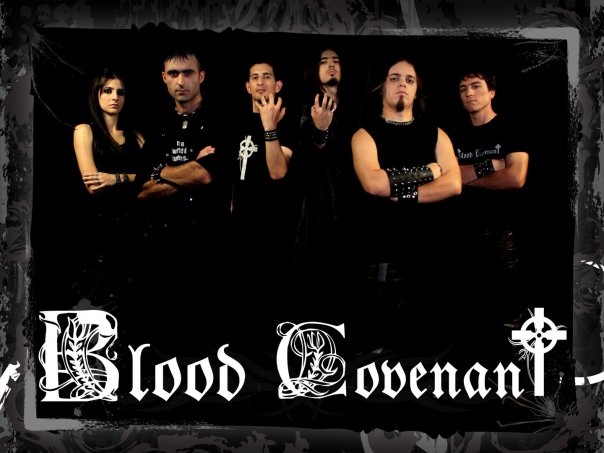
BLOOD COVENANT

Symphonic (Un)Black Metal


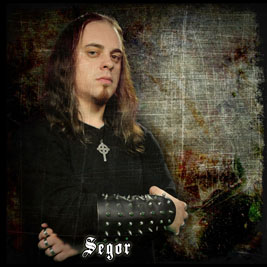
Segor (Sergey Areskin)– Vocals/guitar/Composer 
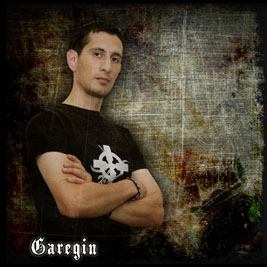
Garegin (Garik Amyan) – Drums/Lyrics/Composer 
Armen Hovhannisyan – Bass 
Hasmik Hovhannisyan – Keyboards 
Narek Onanyan – Guitar 
Mark Areskin – Guitar 

Guest members:

Arthur Areskin – Clean vocals
Vazgen Kondakhchyan – Clean vocals


Armenia is the oldest Christian country in the world. Already in 301 AD, King Trdat III. declared christianity the state religion. Imagine that – 301! The Roman Empire was still in bloom back then and the Germanic tribes were just appearing in the vast forests north of the Roman wall. Not even Rome itself had forsaken the pagan gods, when the Armenians were already building incredible monasteries out of bare rock. This ancient christian heritage is still alive today not only in dozens of amazing churches and cathedrals, like the ones in Etchmiadzin, Kohr Virab, Geghard or Tatev, but also in more, well... unlikely places like a christian Black Metal band. Yes, you read that right: a christian Black Metal band, and a very well-known one, too... BLOOD COVENANT have been around for quite a while now and their mainman Segor Areskine is one of the most active metal musicians in Armenia. I'm glad, he gave me the chance to talk a little bit about his very special stance on Christianity and Black Metal. 


But let’s start with a very basic question. Segor, although you and your bands are pretty well known in Armenia, the Heavy Metal fans from central Europe hardly know anything about BLOOD COVENANT and your other projects. Your first band was called IRON CROSS and started in 2001. Can you tell us please tell us something about IRON CROSS?


Yes, you are right, IRON CROSS was formed in 2001 by me and our drummer Garegin. At first there were three of us and then our former bass guitar player Avag and vocalist Dave joined the group. We played Thrash/Death Metal.

When did you get into Heavy Metal? Was there a special occassion, maybe a special band or album, which got you into Heavy Metal?

Well, you wouldn’t want to call it Heavy Metal, because the music we perform is actually Symphonic Black Metal. In 2001 I started listening to Christian Black Metal bands and it was my inspiration to perform Black Metal. I would also like to mention that I first fell in love with Black and Death Metal when I was 12.


In 2003 you changed the band’s name to BLOOD COVENANT. You also started heading into a different direction music-wise. While IRON CROSS played a mix of Thrash and Death Metal, BLOOD COVENANT might best be described as a Symphonic Black Metal act. What were the reasons for this style-change?

The reason was that I was looking for a brighter style during that period as well as Symphonic Black Metal was more dear to me.

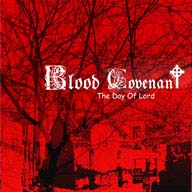
I have to say musically BLOOD COVENANT’s debut album „The Day of Lord“ (2003) is a huge step forward compared to the IRON CROSS demo. You seem to have evolved much as musicians
between 2001 and 2003. It’s like a totally different band, really professional. What do you think were the main reasons for getting such a professional debut album with BLOOD COVENANT?

Thanks for the kind words. You are right, we took a step forward in terms of professionalism. The reason was both the change of style and the fact that our debut album was recorded in a professional studio in 2003. And we worked really hard to evolve. Besides, I became the vocalist of the band, so maybe it had some impact on the positive change, too.


One of my favourite tracks on „The Day of Lord“ is „Old Cross“. I especially love the guitar leads starting around 2:50. They sound to me, like Scandinavian Black Metal is a huge influence for you. Am I right? What are your musical influences?

Exactly, our greatest influences and inspiration are Norwegian Black Metal Bands, for example, Extol, Antestor to name a few.

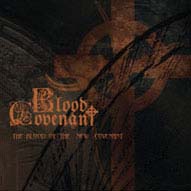
In 2007 you released the follow-up record „The Blood of the New Covenant“. I can’t help but notice another slight change in style. On the one hand your music has become more brutal and heavier as compared to „The Day of Lord“. For example a song like „The Choice“ is really harsh and aggressive. On the other you’ve become more melodic and heading into a more classic Heavy Metal direction, with a clear voice. For example on „Holy Sanctuary“. Was it a deliberate decision to broaden your style or did it evolve that way naturally?

I have to say  that Black Metal consists of  Heavy Metal, Thrash Metal, Death Metal, Power Metal and Progressive Metal. So we started to evolve by including different styles and it all happened quite naturally.

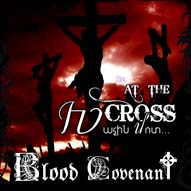
Two years later, in 2009, you released a very special single. You recorded a song called „At the Cross“, which in fact is an old Armenian church hymn. How do Metal and church hymns go together? Are there similar harmonies or melodies, for example? Was it difficult to arrange it for a Metal band?

Actually Church music is very similar to Doom Metal, that’s why it was quite easy for us to arrange both styles. So in that single we used a traditional Armenian folk instrument called “Duduk“ and we came up with a very interesting Doom Black Metal style.


What was it like working with a Duduk? Were there any problems to record it and perform it live together with these loud guitars and drums?

No, not really. I have to say that it has a very rich sound during our live performances.

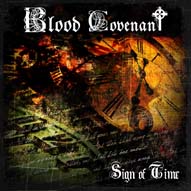
Your latest album „The Sign of Time“ was released in 2011. And like all your releases you are offering it as a free download on your website. Why did you take this decision? Did you try to find a label to release or did you plan from the start to release it on your own label Art4God?

Well, the decision to offer it free was for promotion purposes. As to the label, we do our recordings in „Art4God“. „Art4God“ is just our recording studio. However, our album of 2011 was released on „Darknagar Records“ label. Regarding international labels, we have only worked with „Darknagar Records“ so far.

Looking at your songs and album titles it’s quite obvious that your faith as a Christian plays a huge role in your music.

First of all I would like to mention that we are Christians and we believe in Jesus Christ who was crucified 2000 years ago for our sins and was risen from the dead to save us from hell by endowing us with eternal life. God is our life, and besides, you are right, our faith in Lord Jesus plays a huge role in our music, as we want to show the love of God and the hatred of Satan towards mankind.

So, are you playing in BLOOD COVENANT to worship god? Or is it a means to get the message out to other people?

We play our music for both purposes mentioned by you, that is, to spread the good news and worship God.

I’m sure a lot of people have asked you this question. So please forgive me if I do the same: how do Black Metal and Christianity go together?

We believe that initially all music styles were created by God, including all metal styles.

It must pretty tough for your from time to time, because as far as I can tell the most popular genres of Metal on the Caucasus are the Extreme Metal genres, like Black Metal and Death Metal. What is your view on these bands? Especially what do you think about their atheistic and even satanistic views? Did you ever have problems with other bands or musicians because of your faith?

I have to say that I respect them as musicians but I don’t accept their ideology. As to having problems because of our faith, it should be noted that there were cases when our band wasn’t allowed to take part in certain festivals by some organizers.

Your father is Arthur Areskin, who was the vocalist of Armenian Metal legends AYAS. He did some vocal recordings for „The Blood of the New Covenant“. What’s it like playing in a band and recording together with your own father? Is he very critical of what you’re doing because he’s a musician himself?

Yes, you are right, Arthur Areskin is my father, and besides the „The Blood of the New Covenant“ he also participated in the recordings of the album „Sign of Time“ in 2011. I wouldn’t say that he is critical of what we are doing. I would rather say that he gives us a good piece of advice as a musician.

Live at Highland Metalfest, Yerevan (Armenia)
What are your plans for BLOOD COVENANT? 

Well, we are planning to have a live performance with a symphonic orchestra, but the date for that hasn’t yet been decided. Now we are looking for new labels to work with.
We are also planning a tour. As far as things look we soon we have a tour in Brazil to perform with the Brazilian band ANTIDEMON.

Thanks for taking the time. The last words belong to you:


Thank you too for showing interest in our band and I hope you have prosperity and success in everything you do. God bless you!


DISCOGRAPHY:


The Day of Lord (2003)

1. The Day Of Lord (Joel 1:1-2)
2. Blood Of Redemption (John 1:29)
3. Horns Of Jericho (Joshua 6:20)
4. Messiah (Isaiah 9:1-12)
6. The King of Zion (Psalm 2:6-7)
7. Fall Babylon, Fall (Rev. 14:8-11)


The Blood of the New Covenant (2007)

1. Symphony of Eminence (intro)
2. Magnification
3. Dedication
5. The old cross (intro)
6. The old cross
7. Eternal beauty
9. The choice
10. Holy sanctuary


At the Cross (2009)

01. At The Cross (duduk mix) 


Sign of the Time (2011)

01. Intro (Instrumental)
02. Sign of time
03. Unseen war
04. The call
05. The funeral of the dark kingdom
06. Fall Babylon
07. Hayr Mer
09. Corruptible reflection of reality
10. Golgotha
11. Metanoia
12. Faithful


Thursday, 23 August 2012

IM NEBEL

Avantgarde / Symphonic Black Metal
http://us.myspace.com/imnebelband


Sergiy Ermolaev - Bass
Glixxx - Drums
Michael Lenz - Guitars, Vocals
Vasil Doiashvili - Vocals


"Im Nebel" was formed at the beginning of the year 2006 by three individuals, who decided to combine their views, ideas and perception of music. The idea of this project, which at first tended to be just an experiment, later transformed into a more definite conception - a "band". The original line-up of the band was: Michael (guitars), Sergey (bass) and Dima (drums). It was challenging for them, since they have already played together before, but their efforts failed to produce any result because of a number of disagreements. But inspite of the discrepancies they saw the right track to set their efforts on and eventually came down to a creation of something common. Initially the band lacked tunefulness since the three instruments could not create the desired sound. The joining of Helen (keyboards) and Vaso (vocals) set the final style, sound and more importantly the line-up of the band. In August 2006 the band began recording their album at "Zibo Studio".